Thursday, May 27, 2010

Where To Buy Pilsener

Crazy !!!!!! LIFE

The musical genre is the essence of so-called seventh art. It is since the advent of sound, whose first film, The Jazz Singer (1927) was a musical. But even before that, with silent movies, the rooms needed a pianist who stroked the images with music to help the viewer to enter history. The musical genre, the direct heir of the old vaudeville sessions has remained for decades as a synonym of cinema as an escape. Thus wars and economic crises have served as catalysts for gender huge because now the public needed to forget their terrible and gray everyday life to dive into the magic of cinema. The musical has made great plays to film. Singing in the Rain, West Side Story or Calle 54 prevail, among many others, as masterpieces. But there have been many worthy rarities mentioned as some of the more bizarre or strange films ever made.
LOQUILANDIA (Hellzapoppin, 1941) by HC Potter crazy and surreal
More than any film of the Marx Brothers, this genius deserves to be on the podium of the most deranged films of all time. So ahead of its time that forty years after Airplane copied some of his gags. The beginning is one of the wildest musical numbers in film history, with demons raging madhouse infidels and dialogues. The songs from the rest of the movie clip, but the best comes last, with a man carrying a tree, the monster of Frankenstein, men without legs, legs without men, number of western and most zoophilic ballets I've seen on screen, poodles, sliding down the crotch of acrobats. If you're still sane at the end, this is your list.
A CABIN IN THE SKY (Cabin in the Sky, 1943) of Vincente Minelli
The first work of genius from the Metro, Vincente Minelli, minority was a movie directed at black audiences. Presents fairly simple stereotypes of African Americans, typical of the time, and is based on Christian mythology quite flat. Otherwise it is a gem to recover, with delirious scenes Lena Horne and a delicious exercise in tempting (Above African American women, double stereotype). But the best is the appearance of two jazz greats as Duke Ellington and Louis Armstrong, who plays the devil.
A BLONDE IN THE TOP (The Girl Can not Help It, 1956) Frank Tashlin
starring Tom Ewell, the husband tempted to The Seven Year Itch and that mixture and busty Marilyn mitómana Sleepy Hollow Monroe and Jayne Mansfield was, and commanded by the director of most of the films of Jerry Lewis, if anything this comedy is known for having the presence of some of the biggest stars of rock'n'roll of the fifties. Among them, Gene Vincent, The Platters, Fats Domino, Eddie Cochran and a beaming Queen of rock'n'roll, Little Richard, with some of his best songs.
THE GIRLS OF ROCHEFORT (Les Demoiselles de Rochefort, 1967) Jacques Demy Demy
French was the great innovator of the genre with his 1964 masterpiece, The Umbrellas of Cherbourg, where all dialogue was sung, the first to the last line. With his second foray into the music he wanted to pay homage to American music, with scenes Warhol and music by Michel Legrand running as a thread to follow this opera ultra-pop. The cast Catherine Deneuve repeated with his ill-fated sister Dorléac Françoise, who died in an accident after the premiere of the film. Among the distinguished guests find the teacher Gene Kelly and George Chakiris, the unforgettable Bernardo in West Side Story.

amooor SOME DAME (1968) of José María Forqué
Dame Say a Little Help is amooor would spend a little English. Forqué Neither is Richard Lester and the Braves are The Beatles. But it is a pure and scurfy reading of the brilliant and surreal film of the Fab Four, with many points in common, such as aesthetics or comic references Fu-Manchu. The result is a hodgepodge Yeye, Tip y Coll with such distinguished guests and a great final scene of animation in which Mike Kennedy and his cronies are superheroes battling ogres while singing one of his best songs, Bring A Little Loving.
THE LEGEND OF THE TOWN WITH NO NAME (Paint Your Wagon, 1969) Joshua Logan
This film was a flop at the box office in most of the world. Curiously in Spain had a devastating follow-up, coming to recover in theaters for years. Displays of megalomania reached by gender in the sixties, was about to sink his production company, one of the biggest fiascos in the history of cinema. But putting the numbers, the musical western film is a deliciously amoral, where Lee Marvin and Clint Eastwood singing, with their own voices! A jewel that makes its major flaws its greatest virtues. By the way that the director had previously tested with another title deranged musical, Camelot (1967)
THE PHANTOM OF THE PARADISE (Phantom Of The Paradise, 1974) Brian De Palma
A year before the better known (and below) The Rocky Horror Picture Show, The Phantom of the Paradise is the ultimate movie work of glam rock. With a baby story both of The Phantom of the Opera and Faust as the shows of Alice Cooper in the 70's, this gem is converted into the hands of a young Brian De Palma in a delirious pop piece full of unforgettable moments. The villain is inspired by the tyrannical producer Phil Spector, played by the composer of its great soundtrack, and left the diminutive Paul Williams, singer and songwriter for the Carpenters and the Muppets, among others (if that's not sinister, " what is?).
Lenny (1974) by Bob Fosse Lenny
is a musical. Well, many people might argue that. For indeed it is a musical without songs. But is director Bob Fosse, choreographer and former director of jewelry as Cabaret and All That Jazz, and in fact structure the film like a piece of the genre, with the monologues of Lenny Bruce exercise of musical interludes. Thus, this biopic of terrorist humor becomes a movie musical more than most. A sinister tale can look at the camera and show light and shadow of a black and white crushing its greatest virtues and more hypocrisy. And has one of the best performances of Dustin Hoffman monstrous.
NEW YORK, NEW YORK (1977) Martin Scorsese Scorsese
, passionate film buff, paid homage to MGM musicals with this work. In fact its star, Liza Minelli (then director of the Italian-American girlfriend), is the daughter of one of the legends of the musical, Judy Garland. But he gave his touch. The result is a film as great as strange, mixing equal parts musical history of the 40's, with the decline of big bands and the emergence of star vocalists and be bop, with the bitterness of their own storm director's film Raging Bull. Liza is out, and his New Yok, New York (the original) is something that could never match Sinatra. And Robert De Niro methodical draw a character gets nasty but charming, and although his saxophone sounds in the film, they came to learn the piano, like a good son of the actor's studio.
SGT. PEPPER'S LONELY HEARTS CLUB BAND (1978) of Michaerl Schultz
With the excuse of making a film with songs by The Beatles joined The Bee Gees and the superstar of the seventies Peter Frampton in one of the musical projects most bizarre of all time. In his cast are actors like Steve Martin and Donald Pleasance with bands like Aerosmith, Alice Cooper, or Earth, Wind & Fire. Some actions, such as the Beatles collaborator Billy Preston, are good. Other better not talk. So far no one has dared to edit on DVD.
THE MAGICIAN (The Wiz, 1979) Sidney Lumet
Somebody explain to me how a prestige director Sidney Lumet (Twelve Angry Men, Dog Day Afternoon, Network ...) finished directing version Motown, and so black, the Wizard of Oz. The result is a rarity kitsch in the service of Diana Ross too advanced in years to make it believable Dorothy, a Michael Jackson doing more acrobat scarecrow than usual and Richard Pryor as the Wizard of Oz.
XANADU (1980) by Robert Greenwald
Considered one of the top 10 worst movies of all time by the founders of the Razzie Awards. It also has the honor of receiving the first prize Razzie for worst director. Among its virtues, be coupled to Olivia Newton-John, who tested the bitterness of failure after the boom of Grease, and Gene Kelly, in his unfortunate last appearance before the cameras. The music put the group ELO and the dancers are on skates, does anyone get any better?
FATHER NO MORE THAN TWO (1982) by Mariano Ozores
Someone came up with the brilliant idea of \u200b\u200bmaking a film of Pajares and Esteso for everyone, and for that they joined Tito and Piranha Summer Blue, the annoying child star and the dog pulgoso Spark of movies Parcheesi. For if the mixture is not explosive enough, appear in a number of Frankenstein and Igor dresses, and other thugs with the great theme Dude, really cool. To safeguard the morals of infants breast lumps are not in sight.
FORBIDDEN ZONE (1982) by Richard Elfman
This rarity has the vicissitudes of a mondo underground which is reached by a digestive tract, inhabited by a frog in human form, a sadistic nymphomaniac, a couple brothers emerged from the Three Stooges and a lecherous dwarf king. The rest are deranged songs by Cab Calloway and many bad baba underground. Is the debut film by Richard Elfman, brother of the famous composer Tim Burton films, Danny Elfman, who appears in the film as a demon with his group then, Oingo Boingo. But the main attraction is the dwarf Herve Villechaize, Christopher Lee co-Scaramanga in Bond film The Man with the Golden Gun and twice as Felipe González Javier Gurruchaga who made a famous television interview eighties.
THE HAPPINESS OF KATAKURI (Katakuri-ke no Kofuku, 2001) Takashi Miike
Millennium The musical, directed by more radical, Japanese Miike, author of extreme genius and Dead Or Alive and Gozu. A mix full of surprises from Sound of Music and Night of the Living Dead where sumo wrestlers are not lacking predators, Hollywood-style musical numbers, animation, gore and even a karaoke song.

Volleyball Cameltoe In Spandex

a larger cell

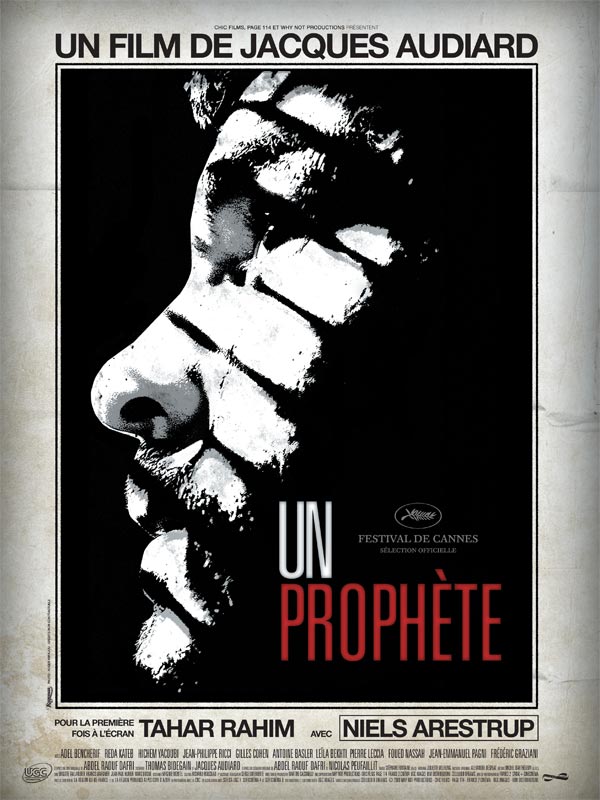
At a time when freedom is sacrificed in the name of supposed safety. Where video cameras fill our streets and the police are uncontrolled legion. Where some alarmist media and tabloid called the massive enclosure. Where there are more prisoners than ever and the only solution to view it for more harmless crime is prison. Where it is proposed to increase the penalties for minors and the return of life imprisonment. But above all, in a world of souls chained to mortgages and junk. Of people locked in a world of isolation and fear ... At this time no wonder they turn into fashion prison movies. Gender claustrophobic and casual as they come, the prison film has great jewels of cinema. The recent success of films Cell 211 (Daniel Monzón, 2009), big winner of the Goya, and the exceptional A Prophet (Jacques Audiard, 2009) are isolates of the rebirth of a single gender.
Prisons have been great moments in film stock. We can find prisons in genres as diverse as the musical, The Phantom of the Paradise (Brian de Palma, 1974, comedy, The Blues Brothers (John Landis, 1980), science fiction, A Clockwork Orange (Stanley Kubrick, 1971) or black film, Goodfellas (Martin Scorsese, 1990). But beyond occasional appearances in scenes covered in this article of films that develop most of their argument behind bars, otherwise the list would be unmanageable.
The first films to rescue melodramas set in prison are quite moral against the bad habits that have to be in prison and atmosphere of black cinema. As in many other genres, Howard Hawks was the pioneer with The Criminal Code (Howard Hawks, 1931), the first film which featured Boris Karloff, which was followed by two versions of San Quentin (Lloyd Bacon, 1937), the first with Humphrey Bogart, and the lower San Quentin (Gordon Douglas, 1946). The first great work
prison is I Live (Robert Wise, 1958), ahead of her time reporting of the death penalty, with a magnificent performance by Susan Hayward. Following this gem gender prison acquire many features of social demand titles.
The great tape in Europe is the French Evasion (Jacques Becker, 1960), a masterpiece and legacy of its director and comprehensive account of the escape from prison.
In The Man of Alcatraz (John Frankenheimer, 1962) the genre takes on a leisurely tone to tell the true story of a prisoner, played by Burt Lancaster, who becomes imprisoned in a world-renowned ornithologist .
The Great Escape (John Sturges, 1962) is the quintessential example of the adaptation of the stage military prison genre. A classic action movie with Steve McQueen in one of his legendary roles that would become a reference work for many others, although the film has great war stories developed in prison camps such as the magnificent Stalag ( Billy Wilder, 1953) or the Oscar-winning The Bridge on the River Kwai (David Lean, 1957), also with William Holden and Alec Guinness enormous. In the world cinema section, Japan's No Greater Love (Masaki Kobayashi, 1959), part of the trilogy The Human Condition, is a non-violent song that drink too much movies like Full Metal Jacket.
The western has also given us examples prison environments, without going any further one of his classic, Rio Bravo (Howard Hawks, 1959) takes place in the cell of an office of sheriff. Leitmotiv that recurs in many western movies, but if we talk about prisons classic recommend reviewing the Cheaters Day (Joseph L. Mankiewicz, 1970), despite being one of the most mediocre films the director of All About Eve and the mark remains a curious mixture of genres (comedy, western ...) and features an exceptional cast (Kirk Douglas, Henry Fonda, Warren Oates ....)

Stuart Rosenberg become one of the directors who knew best how to move the prison environment to the movies, adding fun and exciting movies fair dose of social criticism. His two major contributions are Cool Hand Luke (Stuart Rosenberg, 1967), one of the most memorable roles Paul Newman, and the great Brubaker (Stuart Rosenberg, 1980) with Mr Newman, Robert Redford, taking over as warden of a corrupt prison. The latter has the added bonus of seeing the first role of Morgan Freeman. Another subgenus
to consider are the films set in mental hospitals, where they shine like jewels Shock Corridor (Samuel Fuller, 1963) or One Flew Over the Cuckoo's Nest (Milos Forman, 1975).
Papillon (Franklin J. Schaffner, 1973) is another prison film tops, again with Steve McQueen and Dustin Hoffman glorious to get a wonderful chemistry in this true story of impossible escapes.
At the other extreme is The Midnight Express (Alan Parker, 1978), film from a screenplay by Oliver Stone which endangered the institutional relations between the U.S. and Turkey to give an almost masochistic Turkish prisons.
Escape From Alcatraz (Don Siegel, 1979) was the fifth collaboration between Clint Eastwood and underrated director of Dirty Harry, and in practice one of the best action films set in a prison. A fun and exciting gem many of the clichés that other tapes then repeated ad nauseam.
Bad Boys (Rick Rosenthal, 1983) led to the discovery of Sean Penn and is a story of teenagers in prison. On the other hand contains one of the largest kits in the history of cinema, as in the final bout for several seconds we can see a whole film crew.
More of the same, Enclosed (John Flynn, 1989) made for showcasing Sylvester Stallone and Freedom to Die (Deran Sarafian, 1990), idem for Jean-Claude Van Damme, represent the worst of the genre. A lot of topics and situations with great vengeance and repeated beatings from stockings, proper muscular action film of the 80.
In Spain, all in jail (Luis G. Berlanga, 1993) was the translation of gender Berlanga grotesque and coral the world of the inmate. A comedy well below the director's masterpieces.
Shawshank Redemption (Frank Darabont, 1994) was a sentimental approach to the prison, through complaint and many good intentions. The same director again adapt Stephen King on the bottom The Green Mile (Frank Darabont, 1999). The prison had become by then a halo of redemption in works like these, American History X (Tony Kaye, 1998), in which Edward Norton exceeded their racism behind bars. Also Norton and that whiff Redeemer, The Last Night (Spike Lee, 2002), has an interesting perspective in recounting the past twenty four hours of a man who will go to prison. On the other side of the lockers were thanking the stories of unjust imprisonment based on real cases, such as The Hurricane (Norman Jewison, 1999).
A recent jewelry is Big Bang Love, Juvenile A (Takashi Miike, 2006), a perverse, poetic film equal parts surrealism drinking the best of his brilliant director, Japanese Takashi Miike. Two films like
Leonera (Pablo Trapero, 2008) and The My Prison Yard (Belén Macías, 2008) have recently served to honor the women in prison movie, a genre that traditionally only used for erotic purposes and in the sexploitation films of Women in Cages, Women's Correctional Facility or a male in a women's prison in which women in prison wore tight shirts and liked to whip in masochistic ecstasy. Recent findings
marginal cinema have been sponsored by the great success in TV Prison Break, a series that summarizes in his first season the best action film of the prison environment to get lost in their next season in limbo. Cell 211 has some great players to lift a certain dyes anecdotal history of social criticism. Meanwhile, A Prophet is the last great work to be taken into account in the prison film. An epic work that gathers the best of the genre classic black cinema facing him and the poetry of European cinema. An essential work.
As we await the next film of prisoners, seize his message palatable. There is always smaller cells and strings tighter than ours. But some viewers are not content with that ... and prepare their escape.

Tuesday, October 13, 2009

Game Junkies Cheats For Pokemon Heartgold

Synthesis of wisdom of life of the Yi-Ching


Heaven (chien) is the Primordial Spirit, the unchangeable, intuitive wisdom, which always present in existence and human life, also I called the non-being (wu). It is the enlightened mind for which the knowledge and all things in life are "Easy.

The hexagram two earth (kun) is the manifestation in the entire space of primordial spirit. So Single life or mind is indicated by the amount and number in the range of 1 to 10. These images are beings or things, are part of life, expressed as a section of that unit. Everything takes on different forms to finally return to their undifferentiated state or amorphous (non-being), and therefore, the mind or life in this state is referred to as simple. The simplicity is referred to the state of differentiation of things. Earth (wei) indicates the presence of mind in all things through change. If things change to return to its "natural state" and must go through different states is because they inherently contain a variety of forms which relate to EVERYTHING. Any image seen is thus a compound, a unit in which they remain "invisible" forms on their change over time.

When a thing is seen in its sensible unit says she is firm and when it is developed over time as composed, is said to be Flexible or Soft. An example would be a stem that sprouts from the earth. When the stem grows gives off branches, leaves, flowers and fruits. The drive shaft is the Simple, branches, leaves, flowers, fruits developed unit or the contents of it. This is indicated as compound, complex or structure. So when the stem acquires over time a structure of certain parts, shapes, colors and perfume is called "plum.


The plum is a tree, reaching maturity shown different from another call, for example, apple. The plum ripeness is called firm or solid that all parts (stems, leaves, flowers, fruits) (FLEXIBILITY) make up their differences with each other as the case when compared with the apple. The term Flexible or Soft indicates the constituent parts Structure. So, to say or Soft Flexible indicates that the unit is also something simple-complex or structure.
One thing anyone has in this way as a unit or structure. While
Unit contains the structure when the unit is not see the structure and vice versa. Earth (wei) is the mind when it takes shape and temporal existence, and is therefore identified as the ten thousand things. Heaven and Earth (wu-wei) is a presentation of the Unit. (TAO) as symbolizing the duality apparent interaction or interdependence of things as presented by Lao-Tse in the "2" TTch.

The emergence of a particle infinitesimal dust represents the manifestation of Life Mystery (Hsuang-ming/TAO), and it is philosophically stated as existence, which called being or Wei Lao. Therefore be as Wei indicate states or related variables. Germ Lao calls and this generally covers both an infinitesimal point as a particle or even un-embryo-and described the manifestation of what is born, grows and finally disappears.


The Hexagram-3-chun, is the image of what emerges when Heaven (wu) and Earth (wei) interact. We see the sequence that says, "After heaven and earth exist (wu-wei) that give rise to different beings. What fills the space between heaven and earth are individual beings. "CHUN means complete. CHUN is the undifferentiated state of being born human beings. It is the principle of individual retire existing or manifestation.

The significance of the potential locked CHUN , which in this case, not only symbolizes the natural roll and everything that is born and grows, but also the self. Chun shows the development of the "structure" can be called mind-body or "human nature". Its value in life indicates the similarity of human action when it should move within the constraints of limited life. An idea, a feeling, a trial are forces that emerge from that which has form (I-be) in Nature full of forms, all of them conditioned and conditioning. Chun is what is "germinating or being born" is harmony between what is individually and surrounding nature, is body balance necessity and sufficiency.

Hexagram 4 Meng The image represents the full manifestation of the existing individual. Meng indicates the self when in the human case-reaching adolescence, in terms of mind. It would be an idea that is defined, but not yet fully stabilized. In the spirit Chun individuation process is managed by Wisdom Natural or Innate Tibetans also designated Primordial Wisdom. In the Primordial Meng conjunction as something is, while Chun is said of his image-Chun is visible but not yet lost their home. This means that the natural origin dominates the individual is emerging and that did not lose its essential nature.

Meng is the state where the natural mind (I) decreased during their natural development. In Meng "body-mind" and has a definite figure is not in Chun.


In Meng ancient wisdom has been replaced by small wisdom, as Chuang Tzu calls the intellect is not nothing but the innate wisdom that has "degenerated" in the course of its development over time. The acquisition of the reason or part of the self (subjective mind) in Meng is a recent phenomenon, just as the development of the "blade of grass" is what Chun. Meng therefore is in a state of doubt, that the book called "rudeness." The coarseness is the lack of rigor achieved when the intellect is in its maturity.


The lack of maturity is what will allow me at that place Meng Intuitive Wisdom. The latter is confirmed in the words of the signs says Meng intertwined that means chaotic and therefore confusing lighting. From a mental perspective could be that Chun is intuition natural as it flows in its origin, while Meng is intuition when it can be maintained or preserved in the course of life and ego maturation occurs, as is the case of adolescents where intuition and intellect are not yet definitively separated .

One Meng messages is that "human nature" can only maintain the ancestral wisdom when your vital energy is still in full. In terms of energy (chi) Ancestral Power in adolescence has achieved the highest development, and when she enters the world of external conditions, where the culture is a powerful constraint, the relationship between me and nature tend to gradually separated, and the "chaotic confusion" is a constant in human nature. Meng
marks the point where human nature begins to become involved in the effort and the difficulties away from the easy and simple and gets in the way of the difficult and complex, which is the consolidation of the self.


The arrangement of the hexagrams in the Book of Changes can be seen as a circle where they are distributed the 54 hexagrams. In them there is a sequence where even numbers are a complement to the guiding idea indicated by odd numbers. The sequence starts with the Sky One is the number that follows the Earth that is number two. The Book says THE CREATIVE VA and receptive FRONT COMES BACK TO VA. The first is Guide, the second is what guidance or what goes up. So, odd numbers usually point to what is natural in man, while the image on the even number describes the apparent, the external shape of the phenomena. But nowhere in the book is apparent or formal is decreased to highlight the intuitive or the root of things. Vision of the book is that the creative (Sky-Wu) is like the center of the circle, while the Receptive (Earth-Wei) is the periphery the same and both are the Transcendental or Nature Original Unit that is designated as OAT.

When Lao-Tse in the Tao Te Ching says:

"The Tao begets the One
The One begets Two
THE Two begets Three
THE engenders Three ten thousand things "


The ORIGINAL NATURE TAO or Unit notes always present in the center and periphery of the circle. Original Nature is no more true in the visible, audible and tangible (represented by the Earth and Being number two) that invisible, inaudible and intangible (represented by Heaven at number 1 and non-being). The number three is the union of Heaven and Earth in Chapter 2 of TTch interaction points of being and nonbeing as Lao called Heaven and Earth. The interaction (wu-wei) can be seen as interaction, transformation, and conditioned unit and differentiation. But they can also be seen in the mutual dependence between things that, from the mental perspective is the relationship between subject and object or between self and non-being. It is this mutual tendency to not allow the exclusion of Form or the Self, to make room for intuition or no-way primary. Because the book says clearly, Nature (Tao) is easy (Heaven) and Single (Land) and any of them leads to the next or the existence of one implies the existence of the other.


Saturday, July 25, 2009

Woman In A Leather Skirt

internal principles of Yi-Ching of Chinese grammar Bases


Chien-Wu-Sky its meaning is natural Life or Universal Mind. It works on all levels of existence. Represents the invisible, intangible, inaudible, is non-being is independent of space and time, when they are conditioned by the senses, thought, imagination, etc. Its quality in action is force, strength, power. Because this quality everything is "easy." All without becoming transformed itself. His qualities are four

Yuan is his nature to move forward without going back, and as such, is the origin of everything.

Heng is the power it has to manifest itself as being or seed of things and beings, promoting its continued development. Li

through continuity makes things reach a figure and makes the invisible visible. So non-self shows its external form. Li is the creative here, is internally as "spirit or soul." Chen

is the quality to harmonize the internal of the form with the exterior. This harmony is an agency that sets the pace and duration of life with all that exists.

When Chien manifests appears Kun (the being of things) but never loses its nature Chien to remain invisible, without assuming any form. In this sense Chien qualities are:

Yuan original, only without origin, without beginning or end. Heng

continuity of life without transformation. Li

is lightness, transparency, space without obstacles or resistance. Chen

lasting, eternal, because no parts.


Chien natural as life or mind manifests itself in humans as simple. this simple mind is "easy" to see the beginning and end of things. This simplicity is a carcaterística of primitive or archaic as well as people living in rural areas and is minimally influenced by the "culture" or the "spirit of time."
The nature of the mind can be seen from the perspective of power or natural or innate ability when I do not have the overwhelming force that is constituted as an individual. From the perspective of power or strength, the natural mind sees and does things easily. So everything is "easy." It is the quality of the natural power (creative)

From the perspective of the creative (how easy) is described in six stages:

Mind "simple" for whom everything is "easy" sees things in their beginning and end. The significance of this is that the human being senses the beginning of life, rather than in adolescence or adulthood, because it is closer to its origin. At the end of life, is again close to its origin, and there recovers easy to see things as they are. Beginning and end are taken as a metaphor for "intuitive."

In the beginning, the mind to be direct knowledge of things natural. When it becomes the natural development of self, this, influenced by the culture deteriorates and denatured. This is the downside of it. The culture is symbolized by the quality Li of creativity. Li is the media created that encompasses all members of humanity. Thus, when more advanced is a culture, the more "negative" results for its members. From this perspective, when the vital capacity of man is stronger, clings strongly that cultural possibility, which is the Creative ambushed or masked. As time passes, when the vital energy of man is weak and nearing its end, the original force of the Creative emerge easily and allows you to see things "as is". So beginning and end down all the time interdependence between the individual and based on universal life energy.
beginning and end point to the coexistence of "see and experience" where the intentional and natural are in a continuous exchange. The Creative
itself is the wisdom and "innate ability" in all beings. She is also called "Great" in the Book of Changes.


The "innate wisdom" or intuitive in the human mind is to reflect rather than act. She is like a mirror reflecting everything as is, without adding or taking anything away from things. This is also the flow or Devenir which speaks Lao TTch the Tao Te Ching . The future is always present.
creative in the action of the mind "Simple" is to "facilitate" the work of Nature, which is to follow the course of it. Just as the Creative creates things in due time, this "simple minded" let things sprout by themselves. This spring "for themselves" is the "spontaneous" as it is based all the creativity of art and "human nature."

The image of Creative in the Yi-Chin g is that pulls its forces "self", indicating that the mind to turn inward regenerates without need anything from the outside world. Here is an allusion to the vacuum where "intuitive wisdom" reveals the primordial forces of life and all the events. The Creative (Spirit) to be "strong and vigorous" Rebirth of self and is in a vacuum where is the mystery of the regeneration of life and eternity. This in scripture Taoist is called "Hsuan-ming (Mysterious Life and Inscrutable Mystery) Chuang-tzu also called Hun-tun in Nei-Pien .

When the text of Yi Ching speaks of heaven and says that he draws strength from self implies that even after the generated "ten thousand things" remains in force enough on it to recover its own existence. This "strong enough" is the Void from which comes the mysterious life or true.
Mystery The term used to indicate that all quality or property attributed to life is not real life but fleeting qualities. The Void is the unique quality of life, as seen by the Taoists, both its mystic and its philosophers and artists.
Thus the Spirit is the "essence or nature of the Void" The Void is the Spirit and the Spirit is the Void. Tao

, Vacuum , Spirit and Nonbeing are an "identity."